
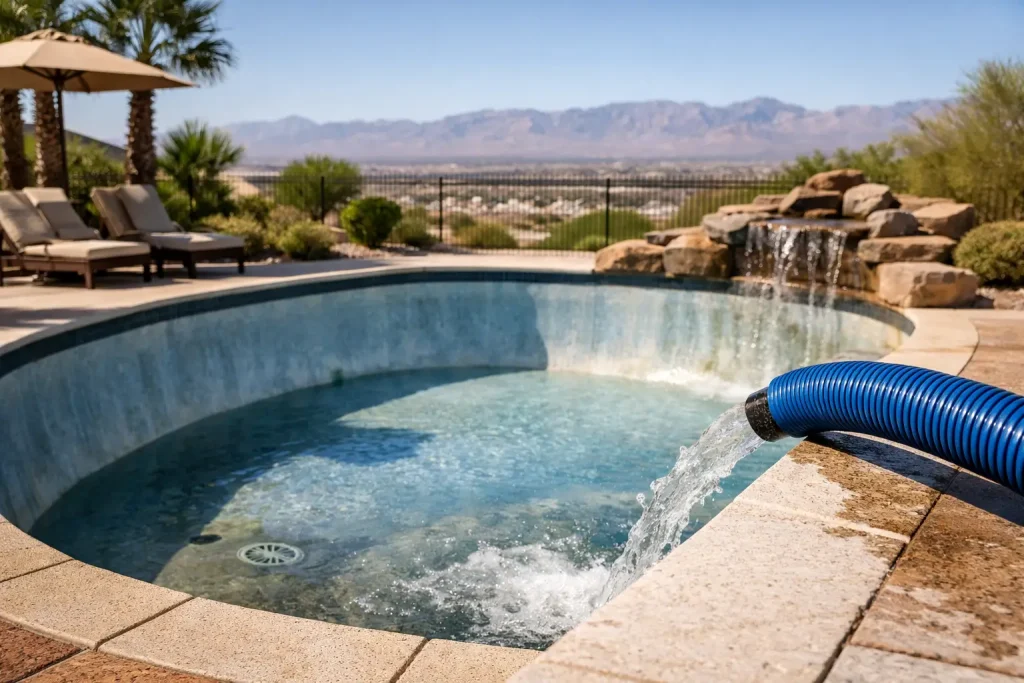
If your pool water looks clear, it is easy to assume everything is fine. In Las Vegas, that is not always the case. The question homeowners ask all the time is how often should you drain your pool in Las Vegas, and the honest answer is less often than many people think – but often enough to stay ahead of mineral buildup, surface wear, and equipment strain.
Our desert climate changes the usual rules. Pools here lose water fast through evaporation, which means every refill leaves behind calcium, salt, and other dissolved solids. Over time, those levels climb, even if you stay on top of regular cleaning and chemical balancing. That is why draining is not just about dirty-looking water. It is about protecting your investment and avoiding bigger repair costs later.
How often should you drain your pool in Las Vegas?
For most residential pools in Las Vegas, a full drain is usually needed about every 2 to 3 years. That timeline works for many homeowners, but it is not a fixed rule. Some pools need attention sooner, while others can go a little longer with proper care.
The biggest reason is total dissolved solids, often called TDS. As water evaporates, those dissolved materials stay behind and become more concentrated. You can add fresh water, brush the walls, and keep your chemicals balanced, but eventually the water itself becomes harder to manage. When that happens, chlorine becomes less effective, scaling gets worse, and your pool can start showing signs of stress.
A pool with heavy use, frequent splash-out replacement, or ongoing chemical issues may need to be drained closer to the 2-year mark. A pool with consistent professional maintenance and balanced water chemistry may stretch closer to 3 years. The right timing depends on how your pool is used and how your water tests over time.
Why Las Vegas pools need draining more than pools in milder climates
Las Vegas pools deal with a very specific set of conditions. Heat, low humidity, intense sun, and hard municipal water all work together to push mineral levels up faster than they would in many other parts of the country.
Evaporation is the biggest factor. When water disappears into the air, it leaves behind calcium and other dissolved solids. Then your autofill or hose adds more hard water, bringing in a fresh round of minerals. That cycle repeats all season long.
This is one reason local experience matters. A pool in a humid climate may go longer without a drain because it is not constantly concentrating those minerals. In Southern Nevada, the water chemistry battle is tougher, especially through the hottest months.
Signs your pool may need to be drained sooner
You do not always need to wait for a calendar reminder. In many cases, your pool starts telling you the water is reaching its limit.
If you are seeing white calcium deposits on tile, around the waterline, or on pool features, that is a common warning sign. If the water feels hard to balance and chemical adjustments do not seem to hold for long, that is another. Some homeowners also notice cloudy water that keeps coming back even after cleaning and treatment.
Scaling on salt cells, heaters, and other equipment can also point to high mineral concentration. In plaster pools, roughness on the surface may become more noticeable as calcium buildup increases. If your waterline tile is developing stubborn crusty deposits faster than usual, the pool water may be overloaded with dissolved solids.
None of these symptoms automatically mean you need a full drain right away. Sometimes targeted chemistry corrections can buy you time. But when problems keep returning, draining and starting with fresh water is often the cleaner, more cost-effective solution.
Draining too often has risks too
Some homeowners hear about hard water problems and assume annual draining is the safest move. Usually, it is not.
Draining a pool too often can put unnecessary stress on the interior finish, especially in older pools. Plaster, pebble, and quartz surfaces all benefit from proper care, but frequent draining can accelerate wear if it is done carelessly or at the wrong time. An empty pool can also be vulnerable to cracking, shifting, or damage from heat exposure in extreme conditions.
There is also the simple question of water use and cost. In a city where water matters, draining more often than necessary is not a smart long-term plan. The goal is not to drain on a fixed schedule no matter what. The goal is to drain when the water chemistry and condition of the pool actually call for it.
What affects how often you should drain your pool in Las Vegas?
Several factors can move the timeline up or down. Pool size matters because smaller pools can become concentrated more quickly. Water features can increase evaporation, which speeds up mineral buildup. Heavy swimmer use, frequent chemical adjustments, and the use of certain chlorine products can also change how fast dissolved solids accumulate.
Surface type matters too. Older plaster pools may show the effects of poor water balance sooner than newer finishes. If your pool has aging tile, worn coping, or existing calcium scale issues, high-mineral water can make those problems more noticeable.
Maintenance habits play a major role. Regular brushing, filter cleaning, water testing, and chemistry correction can delay the need for draining. Good care does not eliminate the issue in Las Vegas, but it can help you get the most life out of your water before a drain becomes necessary.
Partial drain or full drain?
In some cases, a partial drain can help reduce dissolved solids without fully emptying the pool. This can be a practical option when the chemistry is drifting but not completely out of range. It may also make sense when temperatures are high and a full drain would create extra risk for the surface.
A full drain is usually the better choice when mineral levels are severe, chemistry problems have become persistent, or the pool is already being scheduled for resurfacing, repairs, or major cleaning. If your pool has stains, scale, or finish issues, draining may be part of a larger plan to restore both performance and appearance.
This is where a professional assessment helps. The best choice depends on the condition of the water, the age of the pool, and the overall health of the surface and equipment.
The safest time to drain a pool in Las Vegas
Timing matters. Draining during peak summer heat is generally not ideal because exposed pool surfaces can dry too quickly and become damaged. Spring and fall are usually safer windows for draining, cleaning, and refilling, especially when temperatures are more moderate.
That said, emergencies happen. If water chemistry is severely out of control or repairs require draining, the work can still be done safely with the right planning. The key is understanding the condition of the pool before you empty it and following the right process from start to finish.
Draining can be a smart time to inspect and upgrade
For many homeowners, draining is not just maintenance. It is an opportunity.
Once the pool is empty, it becomes much easier to inspect for cracks, staining, rough plaster, failing tile, worn fittings, or deck issues around the waterline. If your pool is older, this is often the moment when small problems become visible before they turn into expensive repairs.
It can also be the right time to think bigger. If your finish is fading, your tile line is dated, or your deck has seen better days, draining may line up naturally with a resurfacing or remodeling project. A lot of Las Vegas homeowners start with a water issue and end up improving the whole backyard. That is often a smarter move than fixing one symptom at a time.
So what should you do now?
If you are wondering how often should you drain your pool in Las Vegas, start by looking past the water color. Clear water can still have high calcium, high dissolved solids, and chemistry issues that slowly affect your finish and equipment.
A professional water test and pool inspection can tell you whether your pool needs a full drain, a partial drain, or simply better chemistry management. If your pool is showing signs of age, this is also a good time to look at surface condition, tile, equipment performance, and any updates that could make the space easier to maintain and more enjoyable to use.
Homeowners across Las Vegas and Henderson often wait until the pool is clearly struggling. A better approach is to stay ahead of the problem. Fresh water, done at the right time and for the right reasons, helps protect the look, function, and value of your pool for years to come. If you are not sure where your pool stands, Nationwide Pool can help you make the right call before a maintenance issue turns into a renovation you did not plan for.