
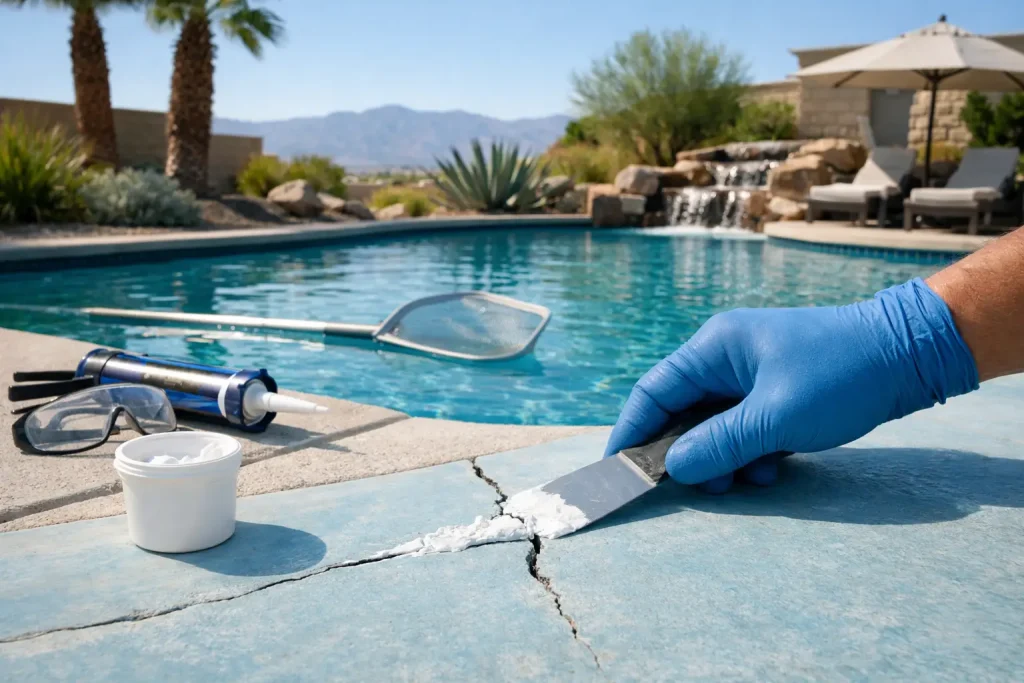
A small crack in pool plaster rarely stays small for long in Southern Nevada. Between extreme heat, shifting soil, aging surfaces, and constant water exposure, what looks like a cosmetic flaw can turn into a bigger repair if it is ignored. That is why pool crack repair Las Vegas homeowners schedule early often costs less, protects the pool structure, and helps preserve the look and value of the entire backyard.
For many homeowners, the first question is simple – is this actually serious? The honest answer is that it depends on the type of crack, where it appears, and whether the pool is also losing water. Some cracks are limited to surface finishes. Others suggest movement in the shell, beam, deck connection, or plumbing area. The key is not guessing. A proper inspection helps you understand whether you are looking at a cosmetic issue, a structural concern, or the beginning of a larger remodel opportunity.
What causes pool cracks in Las Vegas
Las Vegas pools live in a demanding environment. Long stretches of intense sun, large temperature swings, and dry conditions all put stress on pool materials over time. Add in ground movement, older construction methods, and years of chemical exposure, and cracks become much more common than most homeowners expect.
Surface cracks can develop as plaster ages and loses flexibility. This is especially common in older pools that have not been resurfaced in many years. Structural cracks are different. These can form when the pool shell shifts, the soil underneath settles unevenly, or previous repairs did not address the real source of movement. In some cases, tree roots, nearby construction vibration, or poor drainage around the pool area can also contribute.
Not every crack means the pool is failing, but every crack deserves a closer look. Waiting too long can allow water to reach areas it should not, which may lead to erosion beneath the shell, damage behind the finish, or extra stress on surrounding decking and tile.
Signs you may need pool crack repair in Las Vegas
Some pool cracks are obvious. Others show up through symptoms that seem unrelated at first. If your water level keeps dropping faster than normal evaporation, that is worth investigating. The same goes for stained lines, rough plaster edges, loose tile, wet soil around the pool, or a deck section that appears to be separating from the shell.
You may also notice a crack that keeps reappearing after a patch. That usually means the visible damage was repaired, but the underlying movement was not. A repair that lasts starts with diagnosing the actual cause, not just sealing the surface.
For homeowners preparing to sell, remodel, or update an older backyard, crack repair can also be part of a bigger decision. If the pool finish is already worn, the tile is dated, or the deck has seen better days, it may make more sense to combine repair work with resurfacing or renovation rather than treating each issue separately over time.
Cosmetic crack or structural problem?
This is where experience matters. Hairline surface cracks in plaster may affect appearance more than function, especially if the shell underneath is sound. They can still allow deterioration to progress, but they are not the same as a crack that runs through the structure or reflects ongoing movement.
A structural crack tends to raise higher concern when it is wide, deep, actively leaking, or located in key stress areas. Cracks near steps, skimmers, corners, raised bond beams, or transitions between materials often need careful evaluation. If there is movement in the shell or supporting soil, a simple patch may not be enough.
That does not always mean the repair becomes dramatic or disruptive. It simply means the solution should match the issue. Sometimes targeted crack injection or specialized repair methods are appropriate. Other times, the smartest path is to pair structural correction with resurfacing so the pool performs well and looks finished when the work is done.
Why quick fixes often fail
Homeowners are understandably tempted by easy patch products or low-cost spot repairs. The challenge is that a pool is constantly under pressure from water, weather, and movement. If the repair material is not suited to the crack type, or if the area is not prepared correctly, the patch may fail quickly.
The same goes for repairs that focus only on what is visible. A crack can be a symptom rather than the main problem. If water is getting behind the finish, if the shell has shifted, or if the surrounding conditions are causing repeated stress, the repair needs to account for that.
A quality repair is not just about stopping the crack today. It is about protecting the pool from recurring damage and helping the finished result blend with the rest of the surface as naturally as possible. That is especially important for homeowners who care about curb appeal, backyard aesthetics, and long-term property value.
The pool crack repair Las Vegas process
A professional repair process usually starts with inspection and leak evaluation. That first step matters because it helps identify whether the crack is isolated or part of a larger issue. Once the condition is understood, the repair method can be selected based on the pool finish, crack depth, location, and overall age of the pool.
In some cases, the damaged area is opened and treated so the repair material can bond properly. In others, specialized techniques are used to seal and stabilize the crack. If the surrounding finish is heavily worn, resurfacing may be recommended to create a more durable and uniform result. That may sound like a bigger project, but for many aging pools it is the more cost-effective decision over time.
This is also where a full-service partner brings real value. If crack repair reveals outdated plaster, failing tile, old equipment, or drainage problems around the deck, it helps to work with a company that can address the whole picture instead of sending you to multiple contractors. For many homeowners, convenience matters just as much as craftsmanship.
When repair should be part of a remodel
There is a practical side to timing. If your pool already needs resurfacing, tile replacement, deck restoration, or equipment upgrades, bundling work together can reduce repeat disruption and create a cleaner finished product. Crack repair as part of a planned remodel often allows for better material matching, stronger visual results, and a more complete upgrade to the space.
This is especially relevant in Las Vegas neighborhoods with older pools. Many homeowners are not just trying to stop a leak. They want the backyard to feel current, attractive, and easier to maintain. A repaired crack may solve one issue, but a refreshed finish, updated waterline tile, and improved deck can change how the whole property feels.
That is where local experience counts. A team that understands how desert conditions affect pools over time can recommend whether you truly need a standalone repair or whether your money is better spent on a broader improvement plan. Honest guidance matters because not every crack calls for the same answer.
Choosing the right company for pool crack repair Las Vegas
When you are comparing contractors, look beyond the basic promise to fix the crack. Ask how they determine the cause, what repair method they recommend, and whether they also handle resurfacing and renovation if the scope changes. Clear communication is a good sign. So is a willingness to explain trade-offs instead of pushing a one-size-fits-all repair.
You also want a company with real local history. Las Vegas pools age differently than pools in milder climates, and repair strategies should reflect that. A contractor with long-standing experience in this market will better understand common material failures, weather exposure, and the realities of working with older backyard layouts.
Nationwide Pool has served local homeowners since 1981, and that kind of experience brings perspective. Sometimes the right move is a focused crack repair. Sometimes it is a repair plus resurfacing. Sometimes a crack is the signal that the pool is ready for a larger transformation. The value is in getting an answer that fits your pool, your property, and your goals.
If you have noticed a crack, water loss, or signs that your pool is aging unevenly, the best next step is to have it looked at before the damage spreads. A well-repaired pool does more than hold water – it protects the investment you have already made in your home and keeps your backyard ready for the way you want to use it.