
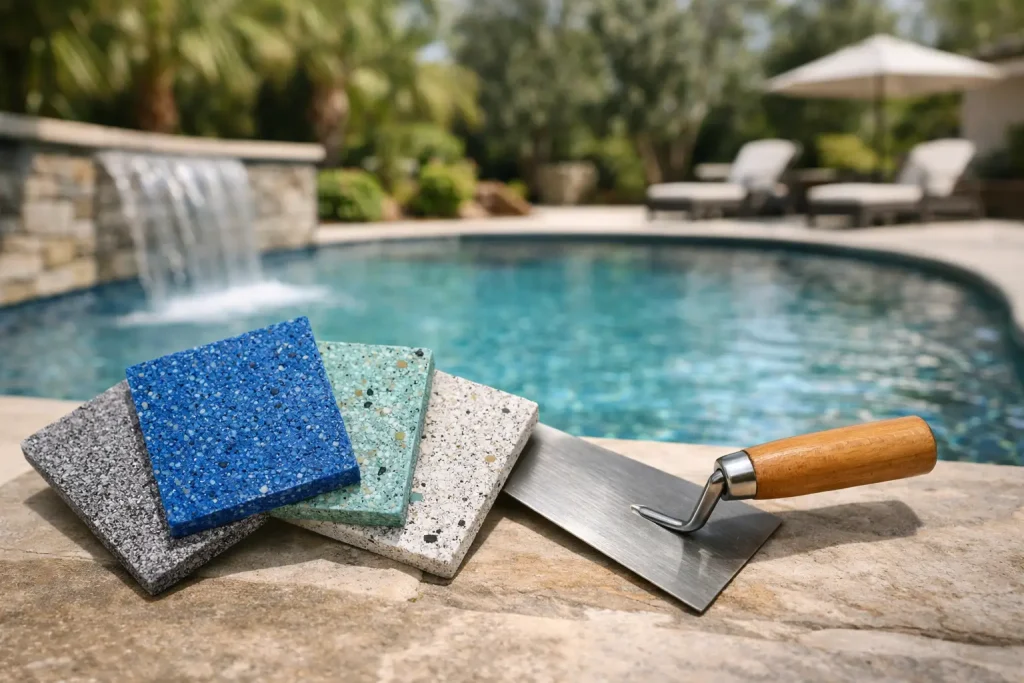
A pool finish looks very different in a showroom sample than it does under the Las Vegas sun. What seems like a simple color or texture choice can affect how your water looks, how the surface feels underfoot, how much upkeep you take on, and how long your remodel holds up. If you’re wondering how to choose pool resurfacing finish, the best approach is to balance appearance, durability, comfort, and long-term value instead of chasing a trend.
For many homeowners, resurfacing starts because the old plaster is rough, stained, dated, or simply nearing the end of its life. But once you are already investing in the project, the finish becomes more than a repair decision. It shapes the whole look of the backyard and plays a big role in whether the pool feels refreshed for a few seasons or truly upgraded for years.
How to choose pool resurfacing finish for your pool
The right finish depends on how you use your pool, what style you want, and how much maintenance you are comfortable with over time. A family pool used every week may call for something different than a showpiece pool built around dramatic backyard design. In Las Vegas and Henderson, climate also matters. Strong sun, heat, water chemistry, and regular use all put pressure on pool surfaces, so a finish has to do more than look good on day one.
Start by thinking about four practical questions. What water color do you want to see every day? How smooth do you want the surface to feel? How long do you want the finish to last before another major update? And how much do you want to spend now versus later? Most resurfacing decisions become clearer once those answers are on the table.
Water color matters more than most people expect
Homeowners often say they want a white, gray, blue, or black finish, but what they are really choosing is the look of the water. Pool finish color influences whether the water reads bright aqua, rich blue, deep teal, or more reflective and dramatic. In desert light, these differences can be striking.
Lighter finishes usually create a cleaner, more classic pool appearance. They can make the water look fresh and bright, which works well for traditional homes and smaller backyards that benefit from a more open feel. Darker finishes tend to create a more upscale, dramatic effect, often with deeper blue or jewel-toned water. They can be beautiful, but they also show scale, dust, and certain imperfections differently.
This is one area where photos alone can mislead. Sun exposure, depth, surrounding deck materials, landscaping, and even interior tile all affect the final look. A finish that looks soft gray on a sample board may read much darker once it fills an entire pool basin.
Texture should fit the people using the pool
A finish can look stunning and still be the wrong choice if it feels too rough for daily use. Families with children, older adults, or anyone who spends a lot of time on pool steps, tanning ledges, and benches should pay close attention to texture.
Traditional plaster is usually the smoothest option at the start. Quartz finishes often offer a middle ground, giving you more durability and color depth while keeping a comfortable feel. Pebble finishes are popular for their premium look and long lifespan, but they can feel more textured underfoot depending on the product and installation.
There is no universal best surface here. Some homeowners love the natural feel and visual richness of pebble. Others prefer a smoother finish, especially if comfort is a top priority. This is one of those choices where honest guidance matters, because the most expensive option is not automatically the best fit for your household.
Comparing the main resurfacing finish options
Most pool resurfacing conversations come down to plaster, quartz, and pebble. Each has strengths, trade-offs, and a different price point.
Plaster
Standard plaster remains the most budget-friendly resurfacing finish and has been used for decades. It gives pools a clean, classic look and a smoother texture, especially when new. For homeowners who want a straightforward refresh without stretching the budget, plaster can still make sense.
The trade-off is longevity and appearance over time. Plaster is generally more vulnerable to staining, etching, and wear than upgraded aggregate finishes. In a hot climate, and with less-than-perfect water balance, those issues can show up sooner. If your goal is a simple reset, plaster may be enough. If your goal is long-term performance with a more upscale finish, it may not be the strongest value.
Quartz
Quartz finishes blend plaster with quartz aggregate, which improves strength and often gives the surface more visual depth. This option appeals to homeowners who want something more durable than standard plaster without jumping all the way to a pebble finish.
Quartz can offer a nice balance of comfort, color selection, and lifespan. It also tends to hold up better against staining and etching than plain plaster. For many remodels, this is the finish that hits the sweet spot between appearance and practical value.
Pebble
Pebble finishes are often chosen for their natural, high-end look and strong durability. They come in a wide range of colors and blends, and they create water colors with more movement and dimension than many simpler finishes.
They also tend to last longer than plaster and can be an excellent fit for homeowners who want a premium remodel with fewer concerns about surface wear. The trade-off is cost and feel. Pebble is usually a bigger upfront investment, and some textures are more pronounced than others. A good contractor will help you compare options within this category rather than treating all pebble finishes as the same.
Budget matters, but value matters more
When homeowners ask how to choose pool resurfacing finish, budget is usually near the top of the list. That makes sense. Resurfacing is a significant investment, and price differences between materials can be meaningful.
Still, the lowest bid and the best value are rarely the same thing. A less expensive finish that wears faster, stains more easily, or falls short of the look you wanted can feel costly in a hurry. On the other hand, paying for a premium finish only makes sense if you value the longer lifespan, upgraded appearance, or added comfort it provides.
Think about how long you plan to stay in the home, how often the pool gets used, and whether this remodel is part of a bigger backyard improvement. If you are creating a more finished, resort-style outdoor space, the surface should support that vision. If you simply need a durable refresh for an older pool, a different finish may be the smarter move.
Installation quality is part of the finish choice
Even the best material can disappoint if it is installed poorly. Surface prep, application technique, curing, and startup care all affect the final result. That is why choosing a finish is never only about material samples. It is also about choosing a contractor who understands local conditions, communicates clearly, and stands behind the work.
An experienced pool professional should explain not only what each finish costs, but why one may suit your pool better than another. They should also help you think through tile, coping, deck color, and the way the resurfaced pool will fit the rest of your yard. The best results come from looking at the remodel as a complete design and performance decision, not just a surface swap.
What Las Vegas homeowners should keep in mind
In Southern Nevada, sun exposure and heat are not small details. They influence how finishes age and how water color appears across the day. Bright desert light tends to make color variations more noticeable, and hard water conditions can also affect how surfaces look over time if chemistry is not managed well.
That does not mean one finish is automatically right for every pool in the area. It means local experience matters. A contractor who has resurfaced pools here for years can help you avoid choices that look good on paper but do not perform the way you expect in a real backyard setting.
At Nationwide Pool, we often remind homeowners that the best finish is the one that still feels right after the excitement of the remodel wears off. It should fit your home, your maintenance expectations, and the way you actually live.
The best way to make the final decision
If you feel stuck between two or three finishes, narrow the choice by putting comfort and long-term satisfaction ahead of first impressions. Ask to compare real examples, not just small samples. Look at the finish in daylight. Think about the water color you want, the texture you can live with, and the level of durability your pool needs.
A resurfacing project should solve problems, but it should also leave you with a pool that feels more inviting every time you step outside. The right finish does exactly that – it brings the pool back to life in a way that fits your home and keeps paying off long after the project is done.