
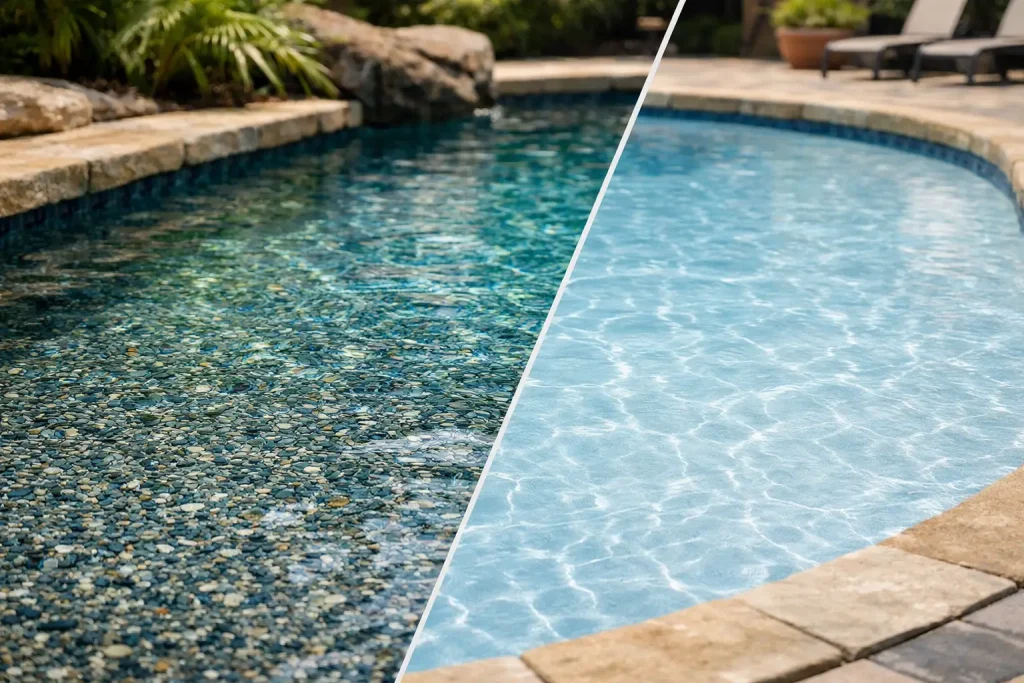
If your pool surface is rough, stained, or simply dated, resurfacing is one of the upgrades that changes everything at once. Homeowners comparing pebble finish vs plaster pool options are usually trying to answer a practical question, not a design question alone: which finish will look good, hold up in Las Vegas, and make sense for the budget over time?
That is the right way to look at it. Your pool finish affects appearance, maintenance, swimmer comfort, long-term repair needs, and how often you will be thinking about resurfacing again. In a climate like Las Vegas, where pools see intense sun, heat, and heavy seasonal use, the surface you choose matters more than many homeowners expect.
Pebble finish vs plaster pool: the core difference
A traditional plaster pool finish is made from a cement-based mix that creates a smooth, classic look. It has been a standard choice for decades because it is clean, familiar, and generally more affordable upfront.
A pebble finish uses small natural stones embedded into the surface. That creates more texture, more visual depth, and typically a longer-lasting finish. It is often chosen by homeowners who want a more custom, upscale appearance and stronger durability.
Neither option is automatically right for every pool. The best choice depends on how long you plan to stay in the home, how much maintenance you want to take on, the look you prefer, and whether you are focused more on upfront cost or long-term value.
Appearance and style
For many homeowners, the visual difference is what starts the conversation. Plaster gives you a simpler, more traditional pool appearance. White plaster creates that bright, light blue water color many people associate with a classic backyard pool. Colored plaster can add some personality, but it still tends to read as a more uniform finish.
Pebble has a richer, more dimensional look. Because it reflects light differently and uses natural stone, the water often appears deeper, more elegant, and more custom. The finish can feel more high-end without looking flashy. That matters if you are remodeling an older pool and want the backyard to feel updated rather than patched together.
This is one area where personal taste really leads the decision. If you want timeless and straightforward, plaster can absolutely work. If you want a finish that becomes part of the design statement, pebble usually has the edge.
Durability in Las Vegas conditions
Las Vegas is hard on pool materials. Constant UV exposure, heat, changing water chemistry, and regular use all put pressure on the finish. That is why durability should be part of the decision from day one.
Plaster is durable, but it is generally more vulnerable to etching, staining, and wear over time. With proper water balance and consistent care, it can perform well, but it often shows its age sooner. In many cases, homeowners start noticing discoloration, rough spots, or surface wear earlier than they expected.
Pebble finish is typically more resistant to those issues. The stone aggregate gives it added toughness, which helps it stand up better over the years. That does not mean it is maintenance-free, but it usually handles long-term exposure and daily use more effectively than standard plaster.
For homeowners planning to stay in their home for years, this can be a major factor. Paying less now is appealing, but resurfacing again sooner may erase that savings.
Feel underfoot and swimmer comfort
Comfort is where the conversation gets more nuanced. Plaster is usually smoother to the touch, especially when first applied. If swimmer comfort is your top priority, that smoothness can be appealing.
Pebble finishes have more texture. Some homeowners like that natural feel, while others find it a little rougher underfoot, especially with certain pebble sizes or finish types. The good news is that not all pebble surfaces feel the same. There are finer pebble options that offer a more comfortable texture while still delivering the durability and look people want.
This is one of those decisions that benefits from seeing samples in person. A finish can sound great on paper and feel different once you imagine kids climbing in and out or spending long afternoons in the pool.
Maintenance and staining
Pool owners usually want a surface that looks great without becoming a constant project. That is one reason the pebble finish vs plaster pool comparison comes up so often during remodeling consultations.
Plaster can be more susceptible to visible stains, scale, and chemical imbalance. If water chemistry drifts, the surface may show it faster. Because plaster is more uniform in appearance, discoloration can also stand out more clearly.
Pebble tends to hide minor imperfections better thanks to its texture and natural variation in color. It can still develop scale or staining if water chemistry is neglected, but it is often a little more forgiving visually. For busy homeowners who want their pool to keep looking polished with less worry over every small mark, that can be a real advantage.
That said, no finish replaces proper maintenance. Even the best surface will struggle if the pool is not cared for consistently.
Cost now versus cost later
If budget is the deciding factor, plaster usually wins on upfront cost. It is one of the main reasons it remains a popular resurfacing choice.
Pebble finish costs more initially, sometimes significantly more depending on the product and design. For some homeowners, that higher investment makes sense immediately because they want the upgraded appearance and longer lifespan. For others, plaster is the practical choice because it solves the immediate problem and keeps the project within range.
The smarter question is not just what each option costs today. It is what you are likely to spend over the life of the pool surface. If pebble lasts longer and requires resurfacing less often, the total value can be better even with a higher starting price.
That is why the right recommendation is rarely one-size-fits-all. A homeowner preparing a long-term remodel may lean toward pebble. Someone improving a property with a tighter renovation budget may choose plaster and still be happy with the result when the work is done well.
Which finish adds more value?
When homeowners upgrade an older pool, they are usually thinking about both enjoyment and property appeal. A worn-out surface makes the entire backyard feel tired. A new finish can make the space feel cleaner, newer, and more inviting almost immediately.
Pebble generally brings a more premium impression. It signals a more custom remodel and often complements updated decking, tile, lighting, and water features. If you are trying to turn an aging pool into a backyard focal point, pebble usually supports that goal better.
Plaster still adds value when replacing a failing or outdated surface. A fresh plaster finish is far more appealing than a stained, cracked, or rough pool. It may not have the same luxury feel, but it absolutely improves usability and appearance.
In other words, both can add value. Pebble tends to elevate the look further, while plaster delivers a clean reset at a lower price point.
When plaster makes sense
Plaster is often the right fit when you want a classic appearance, prefer a smoother feel, and need to keep resurfacing costs under control. It also makes sense when the rest of the backyard design is simple and understated, and you are not trying to create a heavily customized resort-style look.
For some pools, that is exactly the right choice. Not every project needs the most premium finish available. It needs the finish that fits the home, the usage, and the homeowner’s priorities.
When pebble makes sense
Pebble is usually the stronger option when durability, visual impact, and long-term value are high on the list. It is especially appealing for homeowners already investing in a broader remodel and wanting a finish that feels like a true upgrade, not just basic replacement.
It also makes sense in a market like Las Vegas, where the pool is often a major part of outdoor living. When you use your pool as an everyday feature of the home, a finish that holds its appearance and performance longer can be worth the extra investment.
The best choice depends on the pool, not just the material
A good resurfacing decision is never just about picking plaster or pebble from a brochure. The age of the pool, existing damage, waterline tile, deck condition, sun exposure, and your long-term plans all matter. The best results come from looking at the whole project and matching the finish to the way you actually use your backyard.
That is where working with an experienced local team matters. A pool in Las Vegas has different demands than a pool in a milder climate, and material recommendations should reflect that reality. At Nationwide Pool, those conversations are part of helping homeowners choose a finish that looks right on day one and still feels like the right decision years later.
If you are weighing pebble against plaster, the best next step is simple: think beyond the initial price tag and picture how you want your pool to look, feel, and perform after the remodel is complete. The right finish should make your backyard easier to enjoy, not leave you second-guessing the investment.