
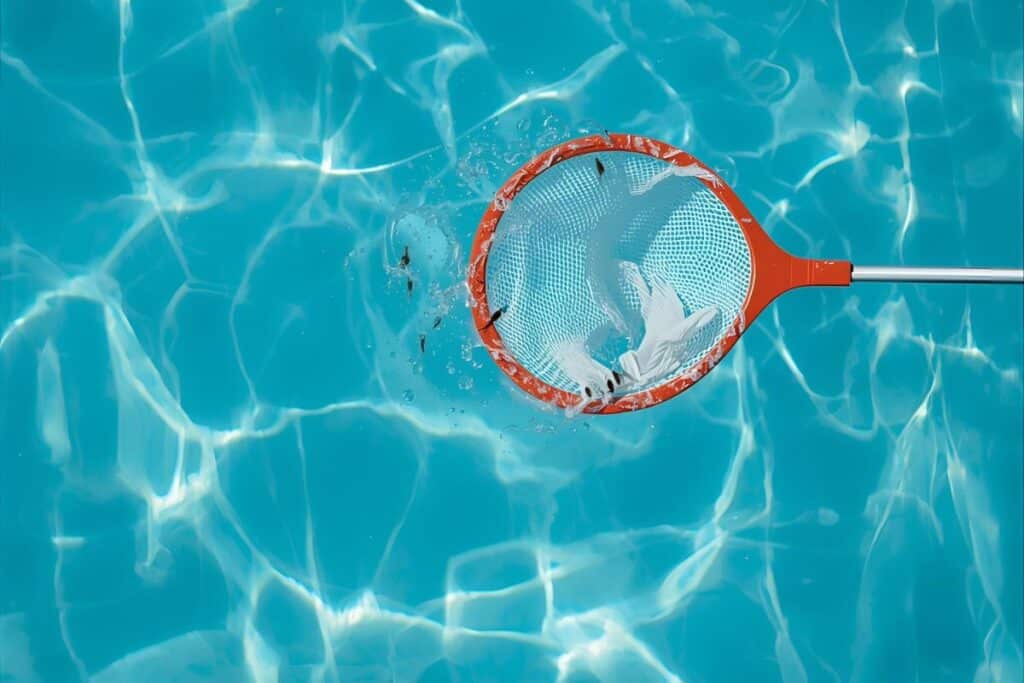
You go outdoors to cool down in the water when it’s 108°F, but instead, you see bugs skimming across the top. Some are gliding on their backs, while others are floating still. All of a sudden, your wonderful pool moment is over.
We at Nationwide Pool have encountered every kind of swimming bug in the pool condition after more than 40 years of cleaning pools in Nevada. The reality is clear: bugs don’t just show up. They show up when something in the water attracts them, such as algae, trash, or calm water. Some species, like backswimmers, can even bite.
Once you know why bugs come and how to get rid of their food sources, you can stop most bug problems from happening. This guide tells you how to find, get rid of, and keep bugs out of your pool so you can swim again without having to worry about them.
Quick Snapshot: The Usual Suspects
- Backswimmers in the pool — swim on their backs, can sting (not poisonous but painful). They hunt other insects.
- Water boatmen — oval, paddle-legged; eat algae and organic matter. They don’t bite, but their presence often signals algae.
- Mosquito larvae — indicate stagnant water; serious because they become biting adults.
- Gnats, thrips, ants, and wasps — attracted to spilled food, sweet drinks, or the water itself.
If you observe bugs crawling about on the surface or a lot of little bodies floating at night, it’s a sign that there might be algae, trash, or bad circulation somewhere.
Why Bugs Choose Your Pool and How to Fix It
Bugs are practical guests. Remove the reasons they come, and they’ll leave.
Main attractors
- Algae & organic debris — food for water boatmen and a magnet for other critters.
- Stagnant or low-flow water — mosquito breeding ground.
- Bright night lights — insect magnets.
- Nearby vegetation — leaves and flowers drop food and give insects a bridge into the pool.
Fixes
- Keep sanitizer in range: Free chlorine at 1–3 ppm is a baseline; algae-prone pools may need tighter control.
- Improve circulation: Run the pump daily (8–12 hours min in hot climates). Good flow discourages larvae and keeps debris suspended so filters can remove it.
- Remove food sources: Skim daily, vacuum weekly, and brush surfaces to stop algae before it forms.
- Trim plants & clean the deck: Cut back branches and remove standing puddles near the pool.
- Switch lighting: Use yellow-tone or LED lights that attract fewer insects, and turn lights off when not needed.
How to Get Rid of Bugs in The Pool: Step-By-Step
Use this layered approach; chemicals alone rarely fix a returning problem.
- Skim & scoop — remove visible bugs with a leaf net. Do this first so bugs don’t sink and rot.
- Brush walls & steps — loosen algae and egg masses so the filter can catch them.
- Vacuum to waste (if needed) — if you have heavy debris or eggs on the floor, vacuum to waste or use a manual vacuum to remove them.
- Shock the pool — a chlorine shock will quickly kill algae, larvae, and surface bacteria. Nighttime is best to avoid UV degradation.
- Run the filter 24 hours after a heavy shock and clean or backwash the filter afterward.
- Apply an algaecide (optional) — helps prevent algae regrowth that attracts water bugs. Use a product labeled for pools and follow dosages.
- Clean skimmer baskets and pump strainer — these trap dead insects and eggs; a neglected basket invites the problem back.
Tip: To get rid of mosquito larvae rapidly, you can remove them physically and make sure there is good circulation. If you’re treating standing water that isn’t in the pool, only use larvicide chemicals that are safe for pools as indicated.
Prevention Checklist: How to Keep Bugs Out of Your Pool Permanently
- Maintain chlorine and pH: check weekly (or more in hot months). Balanced water is unattractive to pests.
- Run the pump daily: consistent flow is the single best deterrent to larvae.
- Use a pool cover: covers cut insect access dramatically when the pool is idle.
- Turn off lights at night or use low-attractant bulbs.
- Keep the area tidy: empty trash, clean grills, and remove standing water near the pool.
- Install bug zappers or strategic repellents away from the immediate pool edge to draw insects away.
- Trim landscaping back 6–8 feet from the pool where practical.
The Las Vegas Factor: Desert-Specific Challenges
Our desert environment creates unique bug situations:
Intense Heat: When the temperature reaches 110°F or more, even insects that are used to dry conditions need water. Your pool looks quite nice.
Dust Storms: These introduce organic matter that feeds algae, which attracts bugs. Always astonished after big dust storms.
Minimal Rain: Las Vegas pools are like an oasis for bugs because they don’t have a lot of natural water sources like humid places do.
Water Evaporation: When you lose more than 2 inches of water each week, the chemicals become more concentrated, which makes it tougher to keep the right balance that keeps algae and pests away.
We’ve learned that pools in Las Vegas need to be watched 30–40% more closely for bugs than pools in places with milder weather.
When Backswimmers Strike: Emergency Response
If you or a family member gets bitten by backswimmers in the pool:
- Exit the pool immediately
- Clean the bite area with soap and water
- Apply ice to reduce swelling and pain
- Use antihistamine cream if available
- Monitor for allergic reactions (rare but possible)
Most bites from backswimmers recover in two to three days. If you notice signs of infection or a bad reaction, see a doctor.
If you get bitten by a backswimmer, start the elimination process right away as described above. There are generally more backswimmers than just one.
Common Mistakes That Keep Bugs Coming Back
Mistake #1: Treating Symptoms, Not Causes
If you don’t deal with the algae or chemistry problems that are causing the bugs to come back, they’ll come again. To get rid of bugs in the pool for good, you need to solve what drew them there in the first place.
Mistake #2: Inconsistent Maintenance
If you don’t brush or test the chemicals for a week during the summer, algae can grow. In 108°F heat, algae can grow in 48 to 72 hours.
Mistake #3: Relying Only on Automatic Cleaners
Robotic and suction cleaners can’t brush walls well or get into tight nooks where algae starts to grow. Manual upkeep is still very important.
Mistake #4: Ignoring Early Warning Signs
A few water boatmen today turn into dozens tomorrow, and next week they bring backswimmers. Fix bug problems right away when they’re small.
Keep Your Pool Bug-Free: Trust Nationwide Pool Since 1981
If there are bugs in your pool, it means the water has to be cleaned. Most bugs go away on their own if you fix the chemistry, clean up the mess, and keep the water moving. Your pool stays clean, safe, and pleasant with just a little regular care, so you don’t have to call for emergency help all the time.
Since 1981, Nationwide Pool has been repairing and maintaining pools in Las Vegas. Our crew knows exactly how to fix tough bug problems and the reasons behind them. Call us at (702) 435-6060 or come by our office at 3111 S Valley View Blvd, Suite B 208, Las Vegas, NV 89102 if bugs keep coming back or if you want a maintenance plan that keeps your water clear all the time. We’ll help you keep bugs out of your pool all year round.
FAQs
Q: What are the common swimming bugs in the pool?
A: The Most common are water boatmen, backswimmers, mosquito larvae, gnats, and thrips. Boatmen eat algae; backswimmers can bite.
Q: How to get rid of bugs in the pool quickly?
A: Skim, brush, vacuum, shock the pool, run the filter 24 hours, clean baskets, and apply algaecide if algae is present.
Q: How to keep bugs out of the pool long-term?
A: Keep chlorine and pH balanced, run the pump daily, use a cover when idle, trim plants, and switch to bug-repelling lighting.
Q: Are backswimmers in the pool dangerous?
A: They can bite and cause a painful sting, but are not venomous. Avoid handling them and address the underlying insect/ algae problem.
Q: What should I do if I find mosquito larvae in my pool?
A: Improve circulation immediately, vacuum larvae to waste, shock the pool, and check for any stagnant water nearby.