
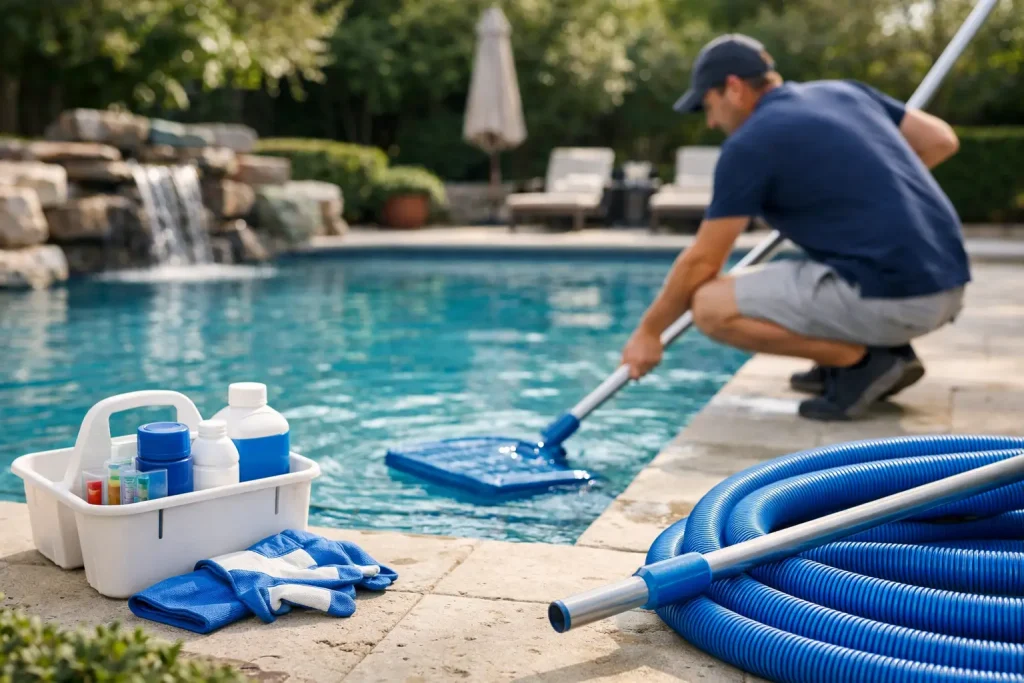
A pool in Las Vegas does not really get an off-season. Even when the weather cools down, the sun, wind, dust, and changing water temperatures keep working on your pool every day. That is why homeowners who ask how to maintain pool year round usually are not looking for theory. They want a plan that keeps the water clear, protects the finish, and helps them avoid surprise repairs.
The good news is that year-round pool care does not have to feel complicated. It does have to be consistent. A beautiful pool is part of how you enjoy your home, and regular upkeep is what protects that investment.
How to maintain pool year round without overdoing it
The biggest mistake pool owners make is swinging between too much attention and none at all. You do not need to obsess over your pool every day, but you cannot leave it alone for weeks and expect everything to stay in shape. The better approach is a simple routine built around circulation, water chemistry, cleaning, and equipment checks.
In Southern Nevada, this matters even more because our climate creates a few specific challenges. Heat burns through sanitizer faster in summer. Wind blows debris into the water year-round. Hard water can leave scale on tile, equipment, and finishes. Even in winter, a pool that looks fine on the surface can develop chemistry issues if no one is watching it.
A dependable routine keeps small issues small. That is usually the difference between affordable maintenance and expensive correction.
Keep the water balanced every week
If there is one habit that does the most work, it is regular water testing. Balanced water helps sanitizer work properly, reduces surface wear, and protects your equipment from scale buildup and corrosion.
For most residential pools, testing at least once a week is a smart baseline. During hotter months or periods of heavy use, twice a week may be better. Chlorine, pH, alkalinity, and calcium hardness all need attention. In Las Vegas, calcium hardness deserves especially close monitoring because our water can be tough on pool surfaces and plumbing.
When chemistry drifts, the symptoms are not always immediate. Water can stay fairly clear while scale begins forming along the tile line or inside the system. Plaster and pebble finishes can also suffer when water stays unbalanced for too long. If you have invested in resurfacing or a custom finish, protecting that surface with proper chemistry is one of the smartest things you can do.
There is some flexibility here. A lightly used pool in mild weather may stay stable longer than a heavily used pool in peak summer. But guessing is where problems start. Test first, then adjust with purpose.
Cleaning matters more than most homeowners think
Skimming leaves and debris is the obvious part, but true cleaning goes further. Brushing the walls, steps, and waterline helps prevent algae, dirt buildup, and scale from settling in. Vacuuming removes what your skimmer and filter do not catch. Emptying skimmer and pump baskets keeps water moving the way it should.
In desert climates, debris is often finer than people expect. Dust, sand, and small organic material can steadily affect water clarity and strain the filtration system. A pool can look mostly clean and still be collecting enough residue to cause problems over time.
That is why weekly attention works better than occasional deep cleaning. It is faster, easier, and far less expensive than trying to recover a neglected pool. If your schedule is busy or you travel often, professional maintenance can make sense simply because consistency is what protects the pool.
Your filter and pump need routine attention too
A clear pool depends on circulation just as much as chemical balance. If water is not moving through the system correctly, sanitizer becomes less effective and debris has more time to settle.
Your pump should run long enough each day to support proper turnover, but the exact runtime depends on pool size, weather, bather load, and equipment efficiency. In summer, longer run times are common. In cooler months, you may be able to scale back. The right setting is not always the same all year, which is why seasonal adjustments matter.
Filters also need regular care. Cartridge filters need cleaning on schedule. Sand and DE systems require their own maintenance approach. If the filter is dirty or overdue for service, water flow drops and the whole system works harder than it should.
This is also where homeowners sometimes miss early warning signs. A noisy pump, weak return flow, air in the system, or pressure changes can point to a repair issue before a full breakdown happens. Catching those signs early can save money and reduce downtime.
Adjust your routine with the seasons
Knowing how to maintain pool year round really comes down to understanding that your pool has different needs in July than it does in January.
Spring and summer
This is the high-demand season. Heat, direct sun, pool parties, and frequent use all increase sanitizer demand and evaporation. Water levels can drop quickly, and chemistry can shift fast. This is the time to test more often, watch chlorine closely, and make sure your system is running efficiently.
It is also the best time to stay ahead of tile scale, because buildup forms faster when heat and evaporation are working against you. If your pool finish, deck, or coping already shows age, summer stress can make those issues more noticeable.
Fall and winter
Many pool owners relax too much once temperatures drop. The pool may not be getting daily use, but it still needs circulation, cleaning, and chemistry checks. Algae can still develop. Debris still blows in. Equipment still ages.
The good news is that winter is often the best time to get more proactive. It is a smart season for equipment inspections, minor repairs, and planning larger upgrades before the next swim season arrives. If your pool surface is rough, stained, cracked, or outdated, cooler months are often ideal for addressing it before spring demand picks up.
Watch for the signs that maintenance alone is not enough
Not every pool problem can be solved with chemicals and cleaning. Sometimes what looks like a maintenance issue is actually a surface, plumbing, or equipment problem.
If you notice recurring stains, rough plaster, constant water loss, cracked decking, failing tile, or an aging pump that struggles to keep up, the pool may need repair or renovation rather than more short-term fixes. The same goes for outdated equipment that drives up energy use or makes water balance harder to manage.
For many homeowners, year-round care works best when maintenance and upgrades are treated as part of the same long-term plan. A remodeled surface, updated equipment, or restored deck is not just about appearance. It can also make regular upkeep easier and help the pool perform better in every season.
Make year-round care realistic for your schedule
The best maintenance plan is the one that actually happens. Some homeowners enjoy handling the basics themselves. Others want the peace of mind that comes from having a trusted local team keep everything on track. Either option can work, as long as the pool gets consistent attention.
If you manage it yourself, stay disciplined with testing, cleaning, and equipment checks. Keep records so you can spot patterns instead of reacting late. If you would rather spend your weekends enjoying the pool than servicing it, professional pool care can remove the guesswork and help catch larger issues before they become costly.
That is especially valuable with older pools. A pool that looked great ten years ago may now need more than weekly cleaning. It may need resurfacing, deck restoration, tile work, or equipment replacement to keep delivering the look and performance you want from your backyard.
For Las Vegas homeowners, that is where working with an experienced company like Nationwide Pool can make a real difference. Having one trusted partner for maintenance, repairs, and renovation creates continuity, and that continuity is what keeps a pool looking good year after year.
A well-maintained pool should feel inviting, not demanding. With the right routine and the right support when needed, you can keep your water clear, your equipment protected, and your backyard ready to enjoy in every season.