
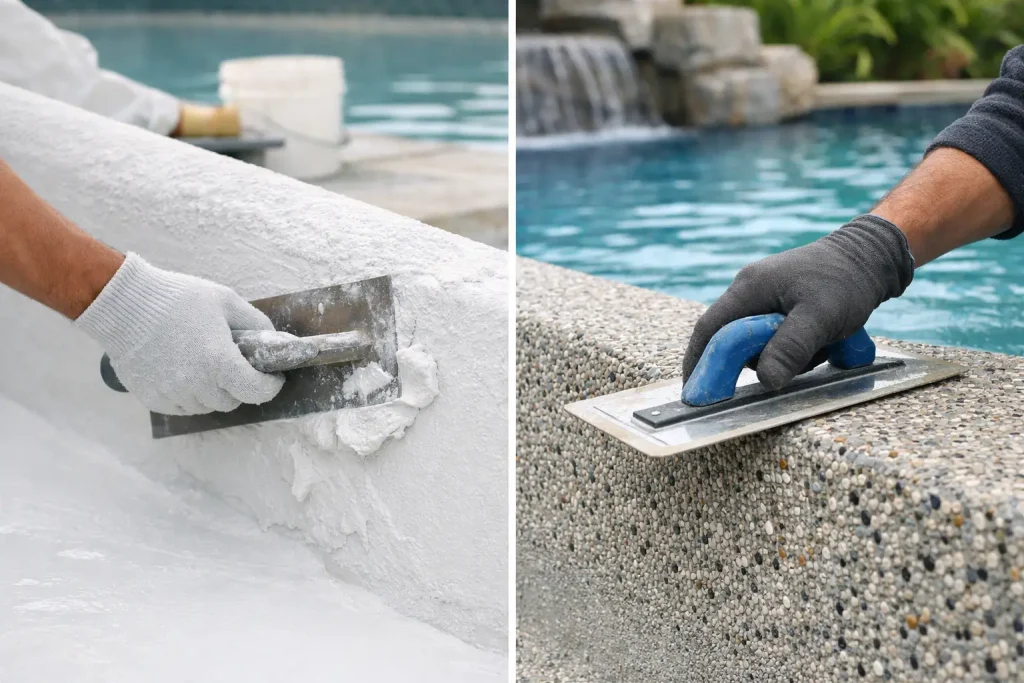
If your pool finish feels rough, looks stained, or has started shedding plaster into the water, you are probably weighing pool replastering vs resurfacing whether you know those terms clearly or not. Many homeowners use them interchangeably, but they are not always the same thing. Knowing the difference can save you money, help you choose the right finish, and keep you from putting a cosmetic fix over a bigger problem.
In Las Vegas, pool surfaces take a beating. Constant sun, heat, chemical exposure, and years of use all add up. A finish that once looked bright and smooth can start showing mottling, etching, discoloration, cracking, or a sandpaper-like texture underfoot. At that point, the question is not just how to make it look better. It is how to restore the pool in a way that fits your goals, your budget, and how long you plan to stay in the home.
Pool replastering vs resurfacing: what is the difference?
The simplest way to think about it is this: resurfacing is the broader category, and replastering is one type of resurfacing.
Pool resurfacing refers to renewing the interior finish of a pool. That can mean applying new white plaster, upgrading to quartz, installing a pebble finish, or using another approved interior surface depending on the structure and design of the pool. The goal is to restore appearance, comfort, and protection.
Pool replastering is more specific. It usually means removing or preparing the old interior plaster and applying a new layer of plaster. Traditional plaster is a classic option because it is clean-looking, cost-effective, and familiar to many homeowners. If someone says they are replastering a pool, they are usually talking about replacing an old plaster finish with new plaster.
So when comparing pool replastering vs resurfacing, the real question is often whether you want to replace your finish with standard plaster or invest in a different resurfacing material with a different look, feel, and lifespan.
When replastering makes sense
Replastering is often the right fit when your pool has a plaster finish that is worn out but the underlying shell is still in good condition. If the surface is rough, faded, stained beyond what acid washing can fix, or has minor age-related deterioration, new plaster can give the pool a fresh start without changing the overall style.
This option tends to appeal to homeowners who want a straightforward renovation and a more controlled project cost. It can also make sense if you are preparing a property for sale and want the pool to look clean, bright, and well maintained without moving into a premium finish category.
That said, plaster has trade-offs. It typically does not last as long as quartz or pebble-based finishes, and it can show wear more quickly in harsh climates. It also requires good water chemistry and consistent maintenance to preserve its appearance. For some homeowners, that is perfectly acceptable. For others, it is worth spending more upfront for a finish that holds up longer.
When resurfacing goes beyond plaster
Resurfacing becomes the better conversation when you are open to upgrading materials, appearance, and long-term performance. Quartz and pebble finishes are common choices for homeowners who want more durability and a more custom look. They can also create richer water color, more texture, and a higher-end finish that changes the whole feel of the backyard.
This matters if your pool is part of a broader renovation. If you are already updating tile, coping, decking, lighting, or equipment, a finish upgrade can tie the whole project together. An older pool can go from dated to polished with the right interior surface, especially when the finish complements the home’s architecture and outdoor living space.
Resurfacing may also be the right path if the existing finish has failed in a way that calls for more than just applying new plaster. Delamination, larger cracks, hollow spots, or repeated finish issues may point to a need for a more thorough assessment before choosing materials.
Signs your pool needs attention now
Some surface wear is mostly cosmetic. Other signs should not be ignored for long. If you notice flaking plaster, streaking, stubborn stains, rough patches, visible aggregate, hairline cracking, or areas where the finish looks thin, the surface is telling you it is near the end of its service life.
Water chemistry problems can also be a clue. An aging surface can affect balance, create places for algae to cling, and make routine cleaning harder than it should be. If your pool never seems to look fully clean no matter how much effort goes into it, the finish may be part of the problem.
For Las Vegas homeowners, texture is often one of the first complaints. A pool that feels abrasive on feet and hands is not just less comfortable. It is also a sign that the material has weathered significantly.
Cost, lifespan, and value
This is where pool replastering vs resurfacing becomes a practical decision rather than just a technical one.
Replastering usually has a lower upfront cost than premium resurfacing options. If budget is the main factor, standard plaster can be a smart way to restore a pool that has become unattractive or uncomfortable. It improves the pool’s appearance and usability without pushing the project into a larger investment.
Resurfacing with quartz or pebble generally costs more at the start, but many homeowners see that as a value decision rather than a luxury purchase. These finishes often last longer and can hold their appearance better over time. They may also reduce how soon you face another major interior renovation.
There is no one-size-fits-all answer here. If you plan to be in your home for many years and want a finish that feels more custom and durable, resurfacing with upgraded materials can make sense. If you want a refreshed pool with a lower initial spend, replastering may be the better fit.
How Las Vegas conditions affect your choice
Desert conditions make finish selection more important. Strong UV exposure, long swim seasons, evaporation, and the need for disciplined water chemistry all influence how a pool surface ages. A material that performs well in one region may show wear differently here.
That is one reason local experience matters. A contractor who understands how pools age in Las Vegas can help you avoid choosing a finish based only on showroom appearance. The better question is how it will look and perform after years of summer heat, hard use, and regular maintenance.
Homeowners also need to think about backyard design. In this market, a pool is not just a utility feature. It is a focal point for entertaining, relaxing, and adding value to the property. The finish you choose should support that larger goal.
Choosing the right finish for your pool
If you are deciding between replastering and a broader resurfacing upgrade, start with three questions. What condition is the current surface in? How long do you want the new finish to last? What kind of look do you want when the project is done?
If your answers point toward a clean, classic refresh with sensible cost, replastering may be exactly right. If you want more durability, more visual depth, and a finish that feels tailored to the space, resurfacing with quartz or pebble may be the stronger investment.
A good contractor should not push one answer for every pool. They should inspect the structure, explain what they see, and talk through the pros and cons in plain language. Honest guidance matters, especially on a project that affects both appearance and long-term upkeep.
For homeowners who want one team to evaluate the finish as part of a bigger renovation plan, Nationwide Pool often helps connect that surface decision to the rest of the backyard. That includes tile, coping, deck restoration, equipment updates, and the overall look you want to achieve.
What to expect from the process
Whether you choose replastering or another resurfacing material, the project usually starts with draining the pool and preparing the old surface. That preparation matters. A beautiful finish depends on proper bonding, skilled application, and attention to detail at every stage.
From there, the material is installed, the pool is refilled, and startup procedures begin. The first days and weeks after the job are important because the new surface needs proper brushing, balancing, and care. A quality installation should come with clear guidance on how to protect that investment right away.
The finished result should do more than cover wear. It should make the pool feel inviting again. Smoother texture, cleaner color, and a more polished look can change how often you use the space and how proud you feel showing it off.
If your pool has started looking older than the rest of your home, this is a good time to ask better questions instead of waiting for the damage to get worse. The right surface choice is not just about fixing what is worn out. It is about giving your backyard a finish that fits the way you live now.