
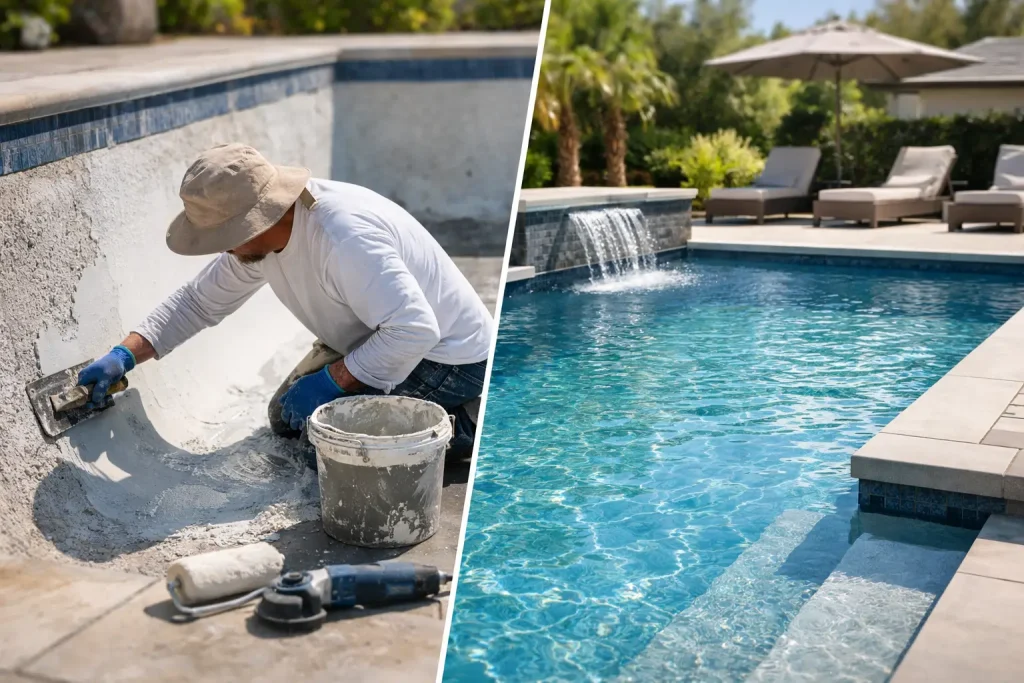
If you’re weighing pool resurfacing vs pool replacement, you’re probably not looking at a small cosmetic issue. Most homeowners reach this point when the plaster is rough, the finish is stained, cracks keep showing up, or the entire pool feels dated compared to the rest of the backyard. The right choice depends on what is actually failing, what you want to improve, and how long you plan to stay in the home.
For many Las Vegas homeowners, resurfacing is the smarter move. It can restore the look and feel of an aging pool without the cost and disruption of a full replacement. But there are cases where replacement makes more sense, especially when structural issues, poor layout, or outdated design limit what renovation can accomplish.
Pool resurfacing vs pool replacement: what changes?
The biggest difference is scope. Pool resurfacing keeps the existing shell and focuses on renewing the interior finish. That may include removing worn plaster, repairing surface damage, and applying a new finish such as plaster, colored quartz, or pebble. In many remodels, resurfacing also pairs well with tile updates, coping replacement, deck restoration, and equipment upgrades.
Pool replacement is a much larger project. It usually means demolishing the existing pool, redesigning the space, and building a new pool from the ground up. That opens the door to changing the shape, depth, features, entry points, spa integration, tanning ledges, and overall backyard layout. It also comes with a much higher investment and a longer timeline.
This is why the question is rarely just about the finish. It is really about whether the bones of the pool are still worth keeping.
When resurfacing is the better investment
If the pool structure is sound, resurfacing is often the most practical and cost-effective path. A pool can look tired long before it is beyond repair. Stains, etching, rough texture, discoloration, and minor surface cracking are common signs that the finish has reached the end of its life, not that the entire pool needs to go.
In those cases, resurfacing gives you a fresh start without starting over. It improves comfort underfoot, refreshes the water color, and can make an older pool feel much more current. For homeowners who like their pool’s size and layout, this is usually the sweet spot. You preserve what works and update what does not.
Resurfacing also makes sense when you want to improve the pool’s appearance as part of a broader remodel. Many pools in Las Vegas were built years ago with finishes and design choices that now feel dated. A new interior finish, new waterline tile, updated coping, and better deck materials can completely change the look of the space without requiring full replacement.
From a value standpoint, resurfacing is often easier to justify because it addresses visible wear while keeping the project focused. You get a cleaner, more attractive pool and avoid the cost of rebuilding features that are still functional.
When pool replacement makes more sense
There are times when resurfacing would only be a temporary fix. If the shell has significant structural damage, persistent leak problems, major settling, or a layout that no longer fits your needs, replacement may be the better long-term decision.
Some older pools were built with shapes, depths, or configurations that do not match how families use outdoor space today. Maybe the deep end takes up too much room, the steps are awkward, the spa is poorly placed, or the pool dominates the yard in a way that limits entertaining. If you already know you want a different design, resurfacing may not solve the real problem.
Replacement can also be worth considering if the existing pool has gone through repeated repairs and still has recurring issues. At a certain point, continuing to patch problems can become more frustrating than helpful. A new build gives you the chance to correct structural concerns, improve hydraulics, add modern features, and create a more efficient and visually cohesive backyard.
That said, replacement is not automatically the better option just because a pool is old. Age matters less than condition. Some older pools are strong candidates for resurfacing and remodeling, while some newer pools have design or construction issues that justify more extensive work.
Cost is important, but it should not be the only factor
Most homeowners begin with budget, and that is understandable. Resurfacing usually costs far less than replacement, but the least expensive option is not always the best value. If resurfacing solves the actual problem, it can be a smart investment. If it only hides deeper issues, it may delay a bigger expense rather than prevent one.
The better question is what you are paying for. With resurfacing, you are investing in renewed performance and appearance while keeping the existing structure. With replacement, you are paying for a complete reset – design, construction, materials, and often a new experience in how the pool functions within the yard.
There is also the issue of adjacent upgrades. A homeowner may begin by comparing resurfacing to replacement, then realize the more realistic comparison is resurfacing plus remodeling versus full replacement. If the shell is in good condition, updating the finish, tile, coping, deck, and equipment can deliver a dramatic transformation at a much lower price point than building a new pool.
How to tell if your pool has structural problems
This is where professional inspection matters. Surface wear can look dramatic, but not every ugly pool is structurally compromised. On the other hand, a pool with visible plaster damage may also have deeper issues behind the finish.
Warning signs worth taking seriously include wide or recurring cracks, measurable water loss, uneven decking caused by movement, hollow spots, bond beam damage, and repairs that keep failing in the same areas. These are the kinds of issues that call for careful evaluation before deciding on resurfacing.
A trustworthy contractor should not push replacement unless the condition of the pool truly supports it. In many cases, honest guidance means recommending resurfacing because the structure still has plenty of life left. In other cases, it means explaining why putting a new finish over a compromised shell is not the best use of your money.
Pool resurfacing vs pool replacement for Las Vegas homes
Desert conditions make material choice and timing especially important. Intense sun, heat, water chemistry challenges, and long exposure to the elements can wear finishes down over time. That does not mean every aging pool needs replacement, but it does mean homeowners should pay attention to early signs of wear before damage spreads.
In the Las Vegas and Henderson market, resurfacing is often part of a larger backyard improvement plan. Homeowners want a pool that looks better, feels better, and fits the style of the home. They are not always trying to reinvent the footprint. They want to modernize the space, protect the asset, and enjoy it more.
That is where an experienced remodel partner can make a real difference. A company like Nationwide Pool can look at the full picture – finish condition, structural integrity, visual goals, deck surfaces, tile, and equipment – and help you choose an option that makes sense for both the property and your budget.
The decision usually comes down to three questions
First, is the structure sound? If yes, resurfacing should stay on the table. Second, do you still like the size, shape, and layout of the pool? If yes, replacement may be more than you need. Third, are you trying to restore the pool or completely reimagine the backyard? Your answer often points to the right scope.
This is why there is no one-size-fits-all answer. Two pools with similar staining or cracking can require completely different recommendations once the underlying condition is evaluated. The smart move is to look beyond the surface and make the decision based on durability, function, and long-term satisfaction.
A worn pool does not always need to be torn out. Sometimes it needs a new finish and a fresh design eye. And sometimes the best path is a full rebuild that gives you the backyard you wanted all along. The key is choosing the option that fixes the real problem, not just the most visible one.